
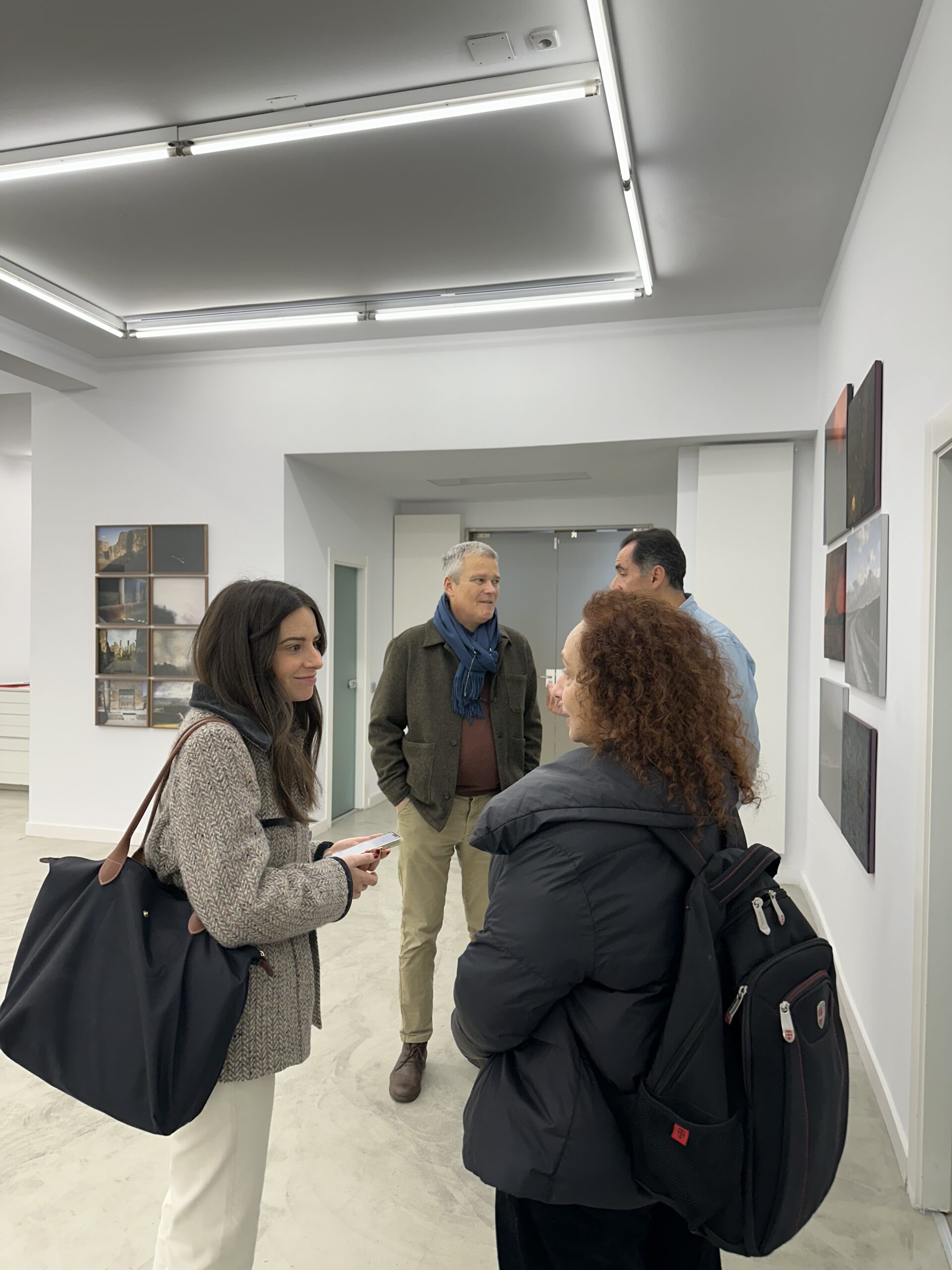
Recientemente, Alexia Eliadou, directora de Aigaia School of Art & Design, visitó el Instituto Nebrija de Artes y Humanidades en el marco de una colaboración internacional entre ambas instituciones. Dentro de las actividades programadas, tuvo la oportunidad de realizar una visita guiada por algunas de las galerías más destacadas del distrito madrileño de Salesas con el director del Instituto, Pablo Álvarez de Toledo.
El recorrido incluyó paradas en tres galerías icónicas: la Galería Daniel Cuevas, la Galería Casado Santapau y la Galería Max Estrella, cada una de las cuales ofrecía una perspectiva única sobre el arte contemporáneo en Madrid. A continuación, te contamos los detalles de cada visita.
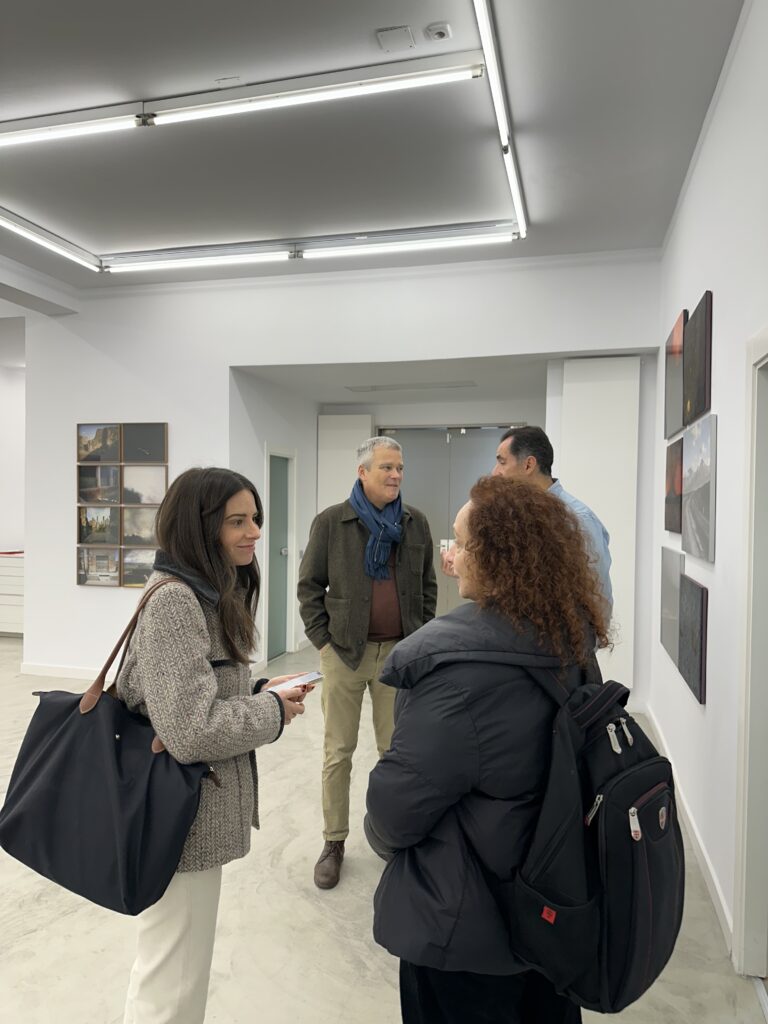
Primera parada: Galería Daniel Cuevas
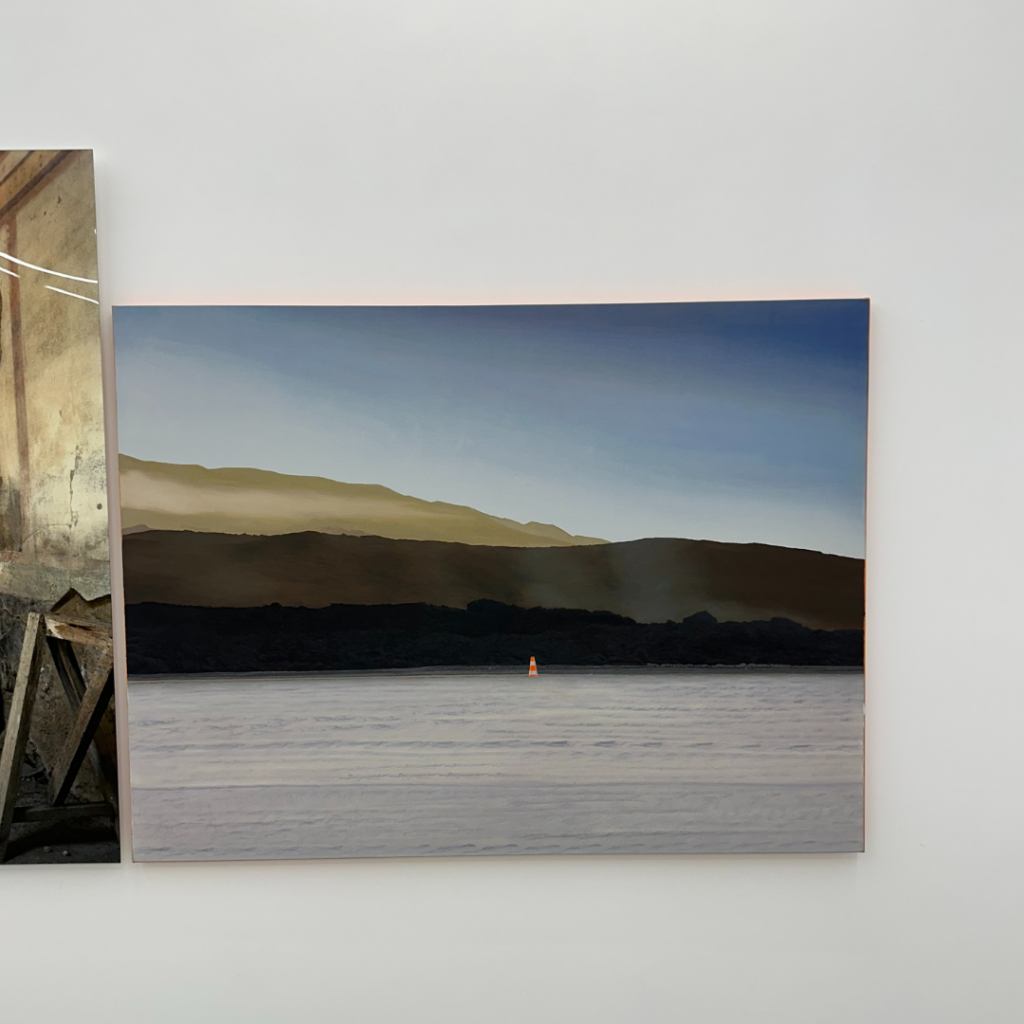
La experiencia comenzó en la Galería Daniel Cuevas, que presentaba la exposición «Aguirre Nave: Paralelos en el tiempo». Esta muestra combina las fotografías de Eduardo Nave con las pinturas de Miguel Aguirre, explorando los efectos de las catástrofes naturales en los paisajes y culturas.
Las imágenes de Nave capturan paisajes transformados por erupciones volcánicas, mientras Aguirre responde con pinturas que dialogan entre el pasado y el presente. Durante la visita, el galerista Daniel Cuevas explicó a Alexia y Pablo Álvarez de Toledo cómo la obra cuestiona temas como el tiempo, la memoria y la resistencia de los paisajes ante las adversidades.
Segunda parada: Galería Casado Santapau
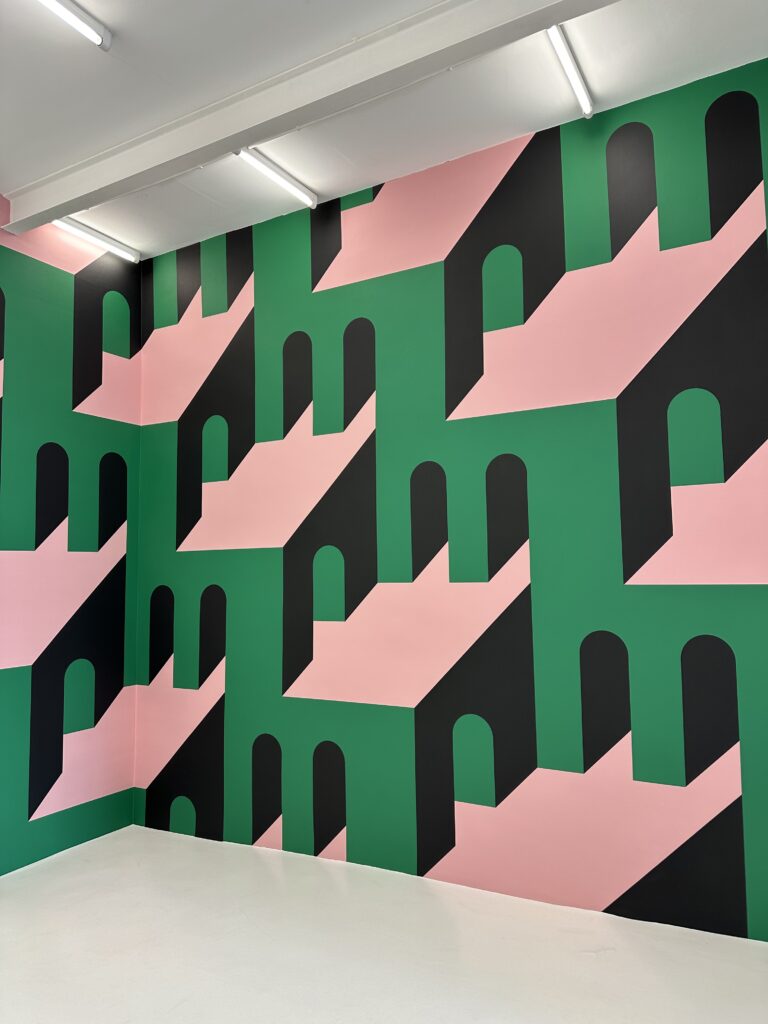
La siguiente parada fue la Galería Casado Santapau, donde se exhibía una nueva colección del artista alemán Bernd Ribbeck. En esta exposición, Ribbeck presenta pequeñas pinturas y murales site-specific inspirados en la arquitectura brutalista, concretamente en el proyecto Les Étoiles en Ivry-sur-Seine, Francia.
Las obras de Ribbeck destacan por sus motivos geométricos multicolores, que fusionan estructura y abstracción. Según Pablo Álvarez de Toledo, el artista logra equilibrar la racionalidad de la geometría modernista con una espiritualidad inherente. El meticuloso proceso de Ribbeck, que incluye capas de pintura acrílica y el uso de marcadores, aporta una profundidad casi tridimensional a sus creaciones.
Tercera parada: Galería Max Estrella
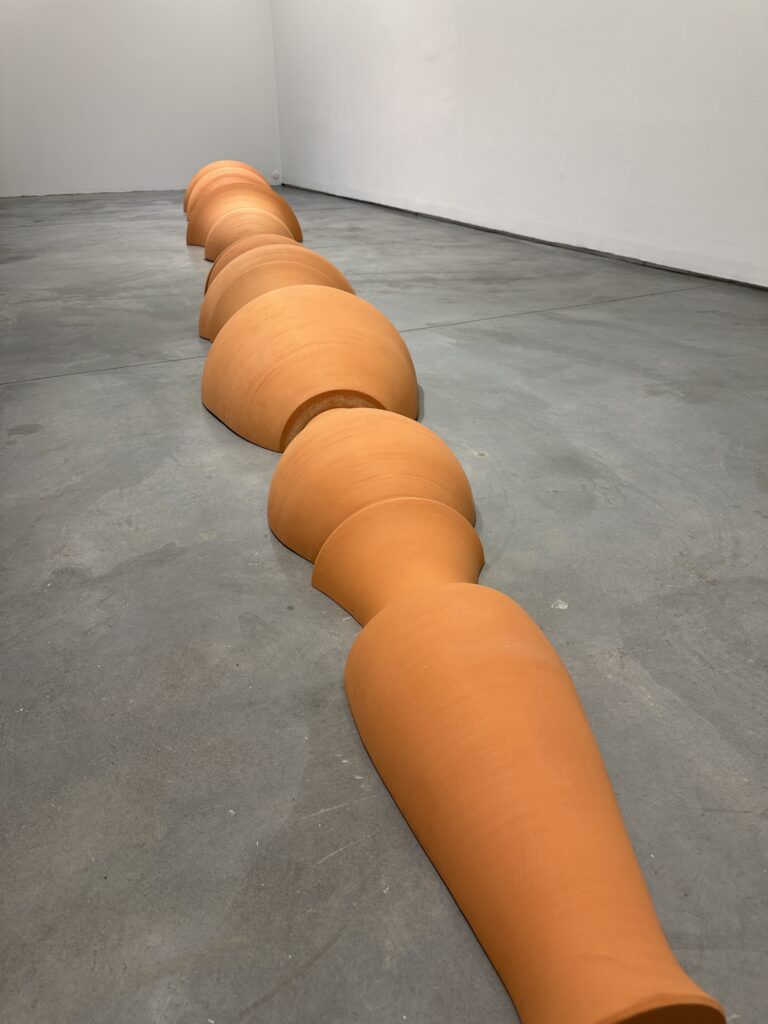
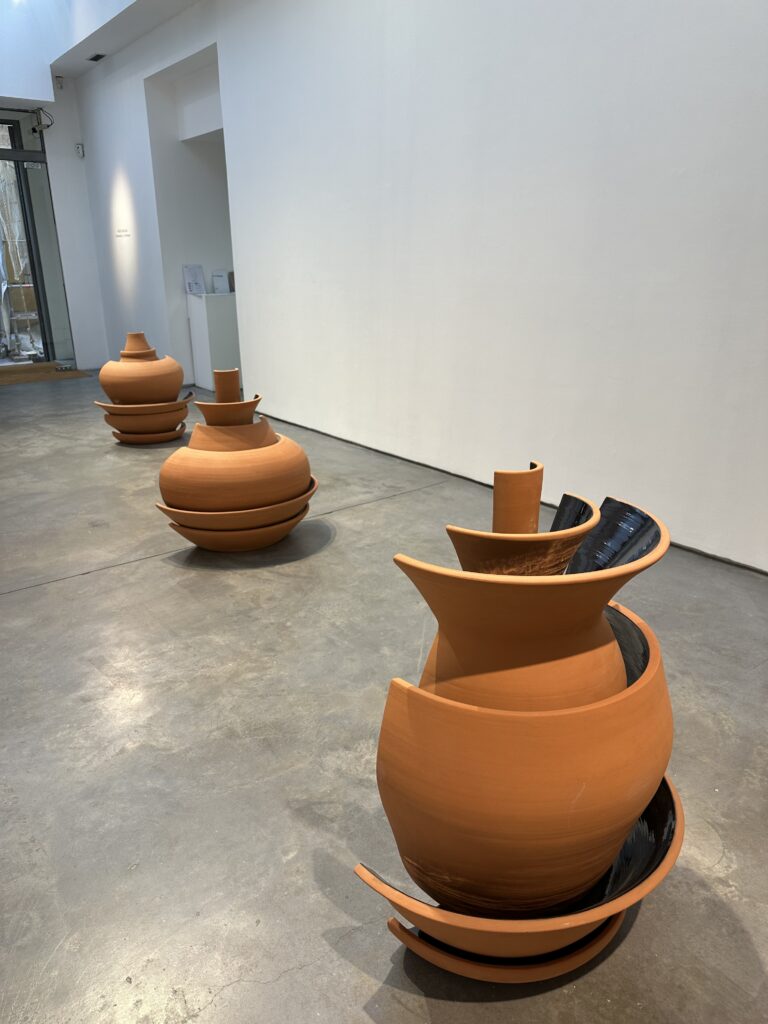
El recorrido concluyó en la Galería Max Estrella, donde la artista japonesa Hisae Ikenaga presentaba su exposición Re-constructions. En esta muestra, Ikenaga transforma objetos cotidianos en esculturas que exploran la relación entre lo orgánico y lo industrial.
Utilizando materiales como cerámica, vidrio y metal, las obras de Ikenaga rompen con las expectativas funcionales de los objetos, otorgándoles un carácter escultórico. Estas piezas invitan al espectador a reflexionar sobre el paso del tiempo y la mutabilidad de los objetos, transformándolos en elementos artísticos que trascienden su uso original.
Reflexiones finales
Este recorrido guiado permitió a Alexia Eliadou adentrarse en el vibrante mundo del arte contemporáneo en Madrid. Cada galería ofrecía una perspectiva única sobre temas como la memoria, la arquitectura y la relación entre lo cotidiano y lo artístico.
El Instituto Nebrija de Artes y Humanidades reafirma su compromiso con la exploración crítica del arte contemporáneo. Actividades como esta enriquecen la formación de sus estudiantes, fomentando una comprensión más profunda de las tendencias artísticas y su capacidad para transformar nuestra visión del mundo.
Salesas Galleries Tour: A day led by Pablo Álvarez de Toledo
Recently, Alexia Eliadou, director of Aigaia School of Art & Design, visited Nebrija Arts & Humanities Institute as part of an international collaboration between the two institutions. Among the planned activities, she had the opportunity to take a guided tour of some of the most important galleries in Madrid’s Salesas district with the institute’s director, Pablo Álvarez de Toledo.
The tour included stops at three key spaces: Galería Daniel Cuevas, Galería Casado Santapau and Galería Max Estrella. Each of these galleries offered a unique experience that invited Alexia to reflect on contemporary art, history, and the rich artistic fabric of Madrid.
First stop: Daniel Cuevas Gallery
The visit began at the Daniel Cuevas Gallery, where the exhibition «Aguirre Nave: Parallels in Time» is on view. This exhibition brings together the work of Eduardo Nave and the painting of Miguel Aguirre, exploring the traces that natural catastrophes leave on landscapes and cultures. Nave’s photographs capture landscapes transformed by volcanic eruptions, while Aguirre’s paintings respond to these images, creating a dialogue between the ancient and the contemporary.
On this occasion, gallery owner Daniel Cuevas guided Alexia and Pablo Álvarez de Toledo through the conceptual layers of the exhibition, highlighting how the work questions our perception of time, memory, and the resilience of the landscape in the face of catastrophe.
Second stop: Casado Santapau Gallery
The next stop was the Casado Santapau Gallery, which is presenting a new exhibition by German artist Bernd Ribbeck.
Pablo Alvarez de Toledo noted how Ribbeck explores the duality between the rational geometry of modernism and the spirituality of abstraction. Ribbeck’s paintings not only evoke the geometry of Brutalist architecture but also give the works an almost three-dimensional depth through a meticulous process that includes layers of acrylic paint and the use of markers and pens.
Third stop: Max Estrella Gallery
The tour continued at Max Estrella Gallery, where Japanese artist Hisae Ikenaga presents her exhibition Re-constructions. In this show, Ikenaga challenges the original functionality of everyday objects and transforms them into sculptures that explore the duality between the organic and the industrial. Using materials such as ceramics, glass and metal, his works invite us to reflect on the fragility and mutability of objects, and question the viewer’s relationship with the material world.
Final reflections
The visit guided by Pablo Álvarez de Toledo allowed Alexia Eliadou, director of Aigaia School of Art & Design, to dive deep into contemporary art and explore key themes such as memory, architecture and the interplay between the organic and the industrial. Each gallery visited provided a unique experience that broadened the understanding of the relationship between the everyday and the artistic.
These exhibitions underline the importance of galleries and contemporary art within the programs of Nebrija Arts & Humanities Institute, where critical study and reflection on the latest artistic trends are encouraged. Thanks to such activities, students develop a broader and deeper perception of art, learning to understand how these elements can transform our view of the world.