
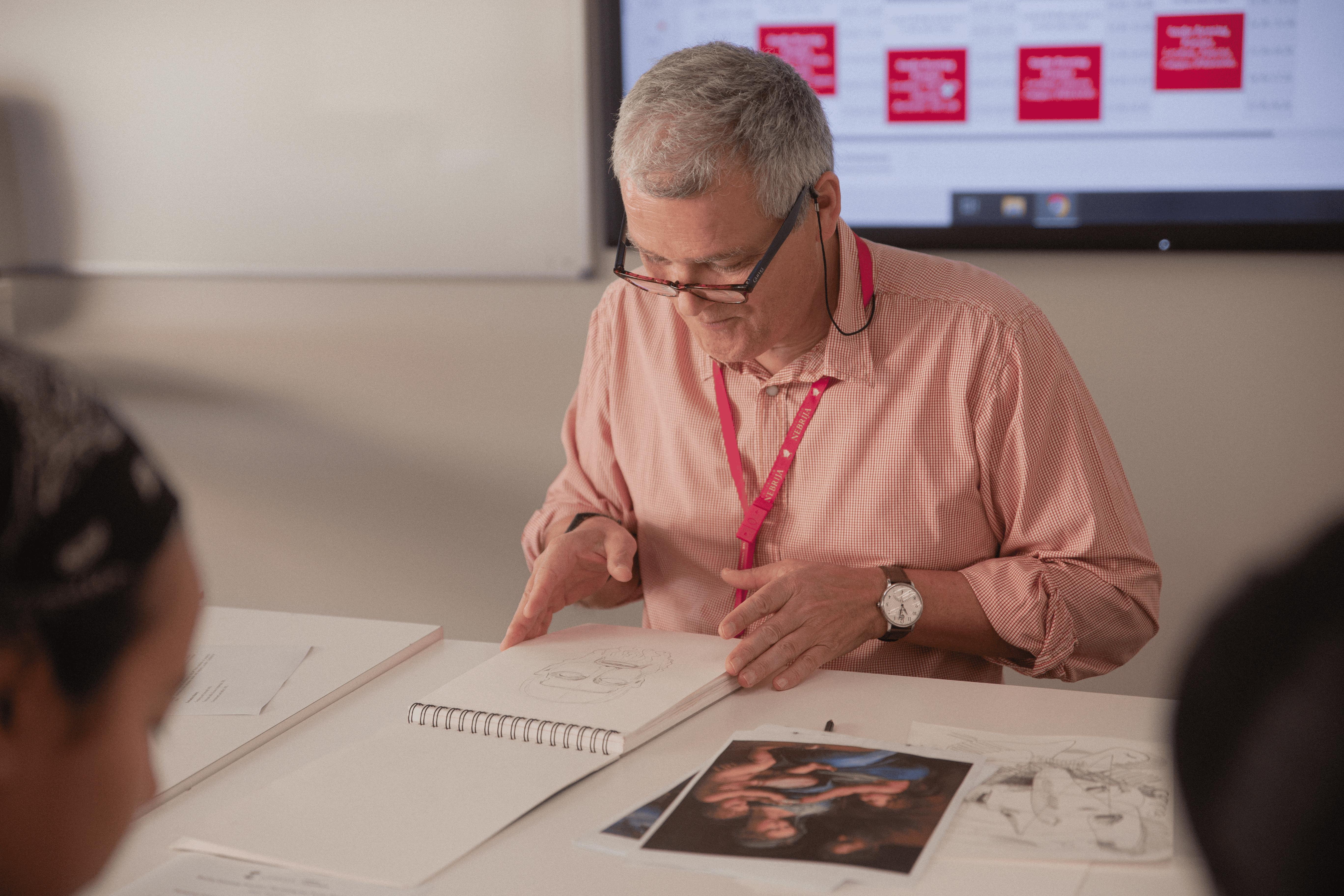
Pablo Álvarez de Toledo, visual artist and director of Nebrija Institute of Arts & Humanities, reflects on the role of artificial intelligence in relation to art, artists and their professional future.
In the article states that the Asociación de Artistas Intérpretes, Entidad de Gestión de Derechos de Propiedad Intelectual (AISGE) is concerned about the impact of AI on professionals in the art world. How does it affect them? Where do they see the limits of AI in art and music? Are they pessimistic about the future of AI in the sector?
Main concerns
For Álvarez de Toledo, «the main concerns of professionals in the sector regarding the arrival of AI in the creative industries are closely related, almost like a domino that, when it falls, pulls down all the other pieces. It is a paradigm shift, but not only for all artists and professionals in the creative industries, but also for all professions and occupations that see the traditional way of doing things threatened, albeit with new opportunities thanks to the agility and speed of AI».
Según un informe de Goldman Sachs citado por Business InsiderIn this context, Business Insider mentions a Goldman Sachs report that predicts the potential loss of up to 300 million jobs because of AI advances.
Dehumanization of art
The infiltration of AI into the arts is generating surprising headlines, such as the case of a robot that created a portrait of the late Alan Turing that sold for more than a million euros. Such developments fuel the debate about the limits of artificial creativity and its impact on the art market, raising fundamental questions about authorship and the value of artistic work in the digital age.
Álvarez de Toledo explains that one of the main fears surrounding the dehumanization of art is that AI will eventually replace human talent, not only in painting, but also in creative disciplines such as acting, music composition, screenwriting and art direction. This transformation presents a scenario that may seem dystopian but is increasingly real: the progressive loss of the personal and emotional touch in artistic creation. Added to this is a growing concern among creators: the unauthorized use of their works, images, melodies, voices and styles.
The generation of content by AI could lead to obvious conflicts with copyright, putting intellectual property at risk and redefining the boundaries of originality and authorship in art.
Artificial intelligence and work: The end of some jobs?
When asked if AI could replace artistic professions, Álvarez de Toledo stresses: «AI is complementary and will not replace human intelligence. Soon there will be a new type of intelligence that will be a combination of human and artificial intelligence, a true evolution of our species. In other words, AI as a positive opportunity and not as something terrible, despite the challenges it poses.” Álvarez de Toledo enfatiza que esta tecnología debe verse como un complemento, no un sustituto de la inteligencia humana. En su opinión, la IA será parte de una evolución en la que la creatividad humana y la artificial se combinarán.
In this sense, the challenge lies not only in the coexistence of artists and artificial intelligence, but also in how to regulate and protect the rights of creators, so that AI is an ally in the expansion of human talent and not a factor in the displacement or misappropriation of their work.
El Confidencial also asks if there is pessimism about the future of AI in the sector.
The director of Nebrija Arts & Humanities Institute believes that while many professionals are skeptical about the progress of AI, there is a degree of optimism. First, because artists are resilient by nature and will continue to create regardless of the circumstances. Second, because adaptation is inevitable.
Ultimately, artists believe that AI will not be an adversary but a collaborator, a tool that will facilitate daily work by optimizing repetitive tasks, expanding creative possibilities, and inspiring new forms of expression.
Nebrija Arts & Humanities Institute works closely with many artists. Despite the concerns they have expressed about AI, they all continue to explore, learn and successfully integrate it as a resource in their creative processes. Rather than a confrontation, we are witnessing the birth of an alliance.
"We should not forget that the value of art does not depend on whether it is created by a human or a machine, but on its impact and meaning. The real question is: how will this change affect audiences and consumer trends?"